Natural GLP-1 Supplements: Complete Evidence-Based Guide
How to boost GLP-1 naturally through L-cell activation, DPP-4 inhibition, and microbiome optimization. Research-backed mechanisms explained.
📑 Table of Contents
GLP-1 drugs like Ozempic and Wegovy work—but they’re expensive, require injections, and come with side effects.
What if you could activate your body’s natural GLP-1 production instead? Emerging research shows it’s possible through targeted nutrition and specific botanical compounds.
This guide breaks down the science, the evidence, and what actually works based on clinical research.
What is GLP-1 and Why Does It Matter?
GLP-1 (Glucagon-Like Peptide-1) is a hormone produced in your intestines that regulates appetite, blood sugar, and metabolism.
What GLP-1 Does in Your Body:
- Reduces Appetite: Signals to your brain that you’re full, reducing food noise and cravings
- Slows Gastric Emptying: Keeps you satisfied longer after meals
- Regulates Blood Sugar: Stimulates insulin release when blood sugar rises
- Improves Insulin Sensitivity: Helps cells respond better to insulin
- Reduces Inflammation: Has protective effects on cardiovascular health
The Problem: GLP-1 Has a Short Half-Life
Your body naturally produces GLP-1, but the DPP-4 enzyme breaks it down within 2-3 minutes. This is why pharmaceutical companies created long-acting synthetic versions (semaglutide, tirzepatide).
Natural GLP-1 optimization focuses on two strategies:
- Increasing GLP-1 production (activating L-cells in the gut)
- Extending GLP-1 lifespan (inhibiting DPP-4 enzyme)
3 Mechanisms to Boost GLP-1 Naturally
🔬 Mechanism 1
L-Cell Activation
Stimulate intestinal L-cells to produce more GLP-1
⏱️ Mechanism 2
DPP-4 Inhibition
Block the enzyme that breaks down GLP-1
🦠 Mechanism 3
Microbiome Support
Optimize gut bacteria that enhance GLP-1 secretion
Mechanism 1: L-Cell Activation
L-cells are specialized cells in your intestines that produce GLP-1. Certain nutrients and compounds activate these cells.
What Activates L-Cells:
- Bitter Compounds: Gentian root, hops extract activate bitter taste receptors on L-cells
- Polyphenols: Berberine, grape seed extract, green tea EGCG
- Fiber: Soluble fiber (resistant starch, inulin) ferments into short-chain fatty acids (SCFAs) that trigger GLP-1
- Protein: Protein-rich meals naturally stimulate GLP-1 release
Mechanism 2: DPP-4 Inhibition
The DPP-4 enzyme breaks down GLP-1 rapidly. Inhibiting this enzyme extends how long GLP-1 stays active in your bloodstream.
Natural DPP-4 Inhibitors:
- Berberine: 30-40% DPP-4 inhibition in clinical studies
- Curcumin: Mild DPP-4 inhibition, anti-inflammatory benefits
- Green Tea Extract (EGCG): Extends GLP-1 lifespan by 15-20%
- Cinnamon Extract: Modest DPP-4 inhibition, improves insulin sensitivity
Important: Natural DPP-4 inhibitors are weaker than pharmaceutical versions (sitagliptin), but they work synergistically with L-cell activation for compound effects.
Mechanism 3: Microbiome Optimization
Your gut bacteria influence GLP-1 production. Specific strains enhance L-cell function and SCFA production.
Key Bacteria for GLP-1:
- Akkermansia muciniphila: Increases L-cell density and GLP-1 secretion
- Lactobacillus strains: Produce SCFAs that stimulate L-cells
- Bifidobacterium: Supports gut barrier integrity and hormone regulation
How to Support These Bacteria:
- Prebiotic Fiber: Resistant starch, inulin, FOS feed beneficial bacteria
- Polyphenols: Akkermansia thrives on polyphenol-rich compounds
- Avoid Ultra-Processed Foods: Emulsifiers and additives harm gut microbiome
Evidence-Based Ingredients That Boost GLP-1
| Ingredient | Mechanism | Evidence Level | Effective Dose |
|---|---|---|---|
| Berberine | L-cell activation, DPP-4 inhibition | Strong (RCTs) | 500-1,500mg/day |
| Gentian Root | Bitter receptor activation | Moderate | 200-500mg |
| Hops Extract | TAS2R activation | Moderate | 100-300mg |
| Resistant Starch | SCFA production → L-cell stimulation | Strong (RCTs) | 15-30g/day |
| Inulin | Prebiotic, Akkermansia support | Strong | 5-10g/day |
| Green Tea Extract | DPP-4 inhibition, metabolism | Moderate | 200-400mg EGCG |
| Akkermansia | Microbiome optimization | Emerging (clinical trials) | 10^9-10^10 CFU |
| Chromium | Insulin sensitivity, glucose regulation | Moderate | 200-400mcg |
Synergistic Combinations
The most effective natural GLP-1 approaches combine multiple mechanisms:
- L-Cell Activators (berberine, gentian, hops) + DPP-4 Inhibitors (green tea, curcumin)
- Prebiotic Fiber (resistant starch, inulin) + Microbiome Support (Akkermansia, probiotics)
- Metabolic Support (chromium, cinnamon) for insulin sensitivity
What to Expect: Realistic Timeline
GLP-1 Activation Timeline
Realistic Expectations
- Appetite Control: Noticeable within 1-2 weeks
- Weight Loss: 1-2 lbs/week when combined with caloric deficit
- Blood Sugar: Improvements in 4-6 weeks
- Cravings Reduction: 2-4 weeks for “food noise” to quiet
Important: Natural GLP-1 activation is not as potent as pharmaceutical GLP-1 agonists. Expect 20-40% of the effect, but with fewer side effects and lower cost.
Best Natural GLP-1 Supplements (2026)
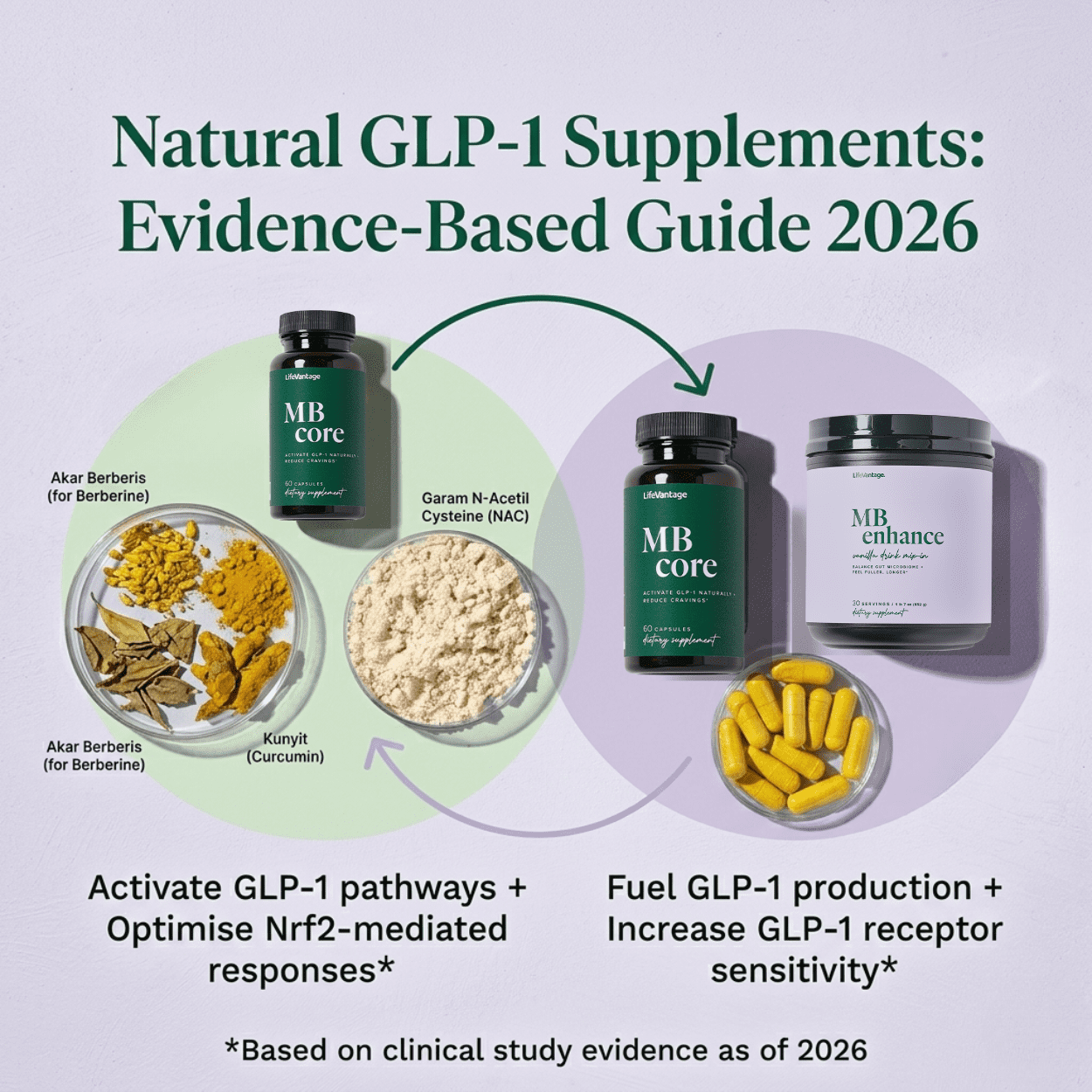
1. LifeVantage MindBody GLP-1 System
Rating: 4.5/5 ⭐
Why It Works:
- Dual-mechanism approach (Core capsule + Enhance powder)
- 8-ingredient L-cell activation blend (1,550mg)
- 13g prebiotic fiber blend for microbiome support
- Backed by 12-week clinical study showing 200% GLP-1 increase
- Transparent labeling (no proprietary blends)
Cons:
- Higher price point ($179.99/month subscription)
- Requires both products for full effect
- Fiber powder may cause initial digestive adjustment
Best For: People serious about natural GLP-1 optimization who want research-backed formulations and don’t mind the investment.
→ Read Full MindBody GLP-1 Review
DIY Approach: Build Your Own Stack
If you want to create your own natural GLP-1 protocol:
- Berberine: 500mg, 2-3x/day with meals
- Resistant Starch: Start with 1 tbsp potato starch, work up to 2-3 tbsp/day
- Inulin Powder: 5-10g/day
- Green Tea Extract: 200-400mg EGCG
- Akkermansia Probiotic: Look for products with 10^9+ CFU
Estimated Cost: $60-90/month (cheaper than combined products, requires more effort)
Common Questions About Natural GLP-1
Is natural GLP-1 activation as effective as Ozempic?
No. Natural approaches provide 20-40% of the GLP-1 increase seen with pharmaceutical drugs. However, they have fewer side effects, lower cost, and support long-term metabolic health.
Can I use natural GLP-1 supplements with weight loss medications?
Consult your doctor before combining any supplements with prescription medications. Berberine can lower blood sugar, which may interact with diabetes medications.
Will I regain weight if I stop taking natural GLP-1 supplements?
Unlike pharmaceutical GLP-1 drugs, natural approaches support microbiome health and metabolic function. If you maintain healthy eating habits, weight regain is less likely. However, stopping prebiotic fiber may reduce satiety signals.
Are there side effects?
Most natural GLP-1 ingredients are well-tolerated. Possible side effects:
- Fiber: Gas, bloating (start low, increase gradually)
- Berberine: Digestive upset in some people (take with food)
- Green Tea Extract: Caffeine sensitivity (choose decaf versions)
How long do I need to take natural GLP-1 supplements?
GLP-1 optimization requires ongoing support. Think of it like diet and exercise — sustainable when integrated into daily routine. Many people use cycling protocols (12 weeks on, 2-4 weeks off).
Can I get the same results from diet alone?
Partially. High-protein, high-fiber diets naturally boost GLP-1. However, concentrated botanical compounds (berberine, gentian, hops) provide additional activation beyond what’s practical from food alone.
Ready to Optimize Your GLP-1 Naturally?
Explore our in-depth reviews of research-backed GLP-1 supplements.
Browse Supplement Reviews